


Lab Reports · Local AI hardware
Running Local AI on NVIDIA GB10
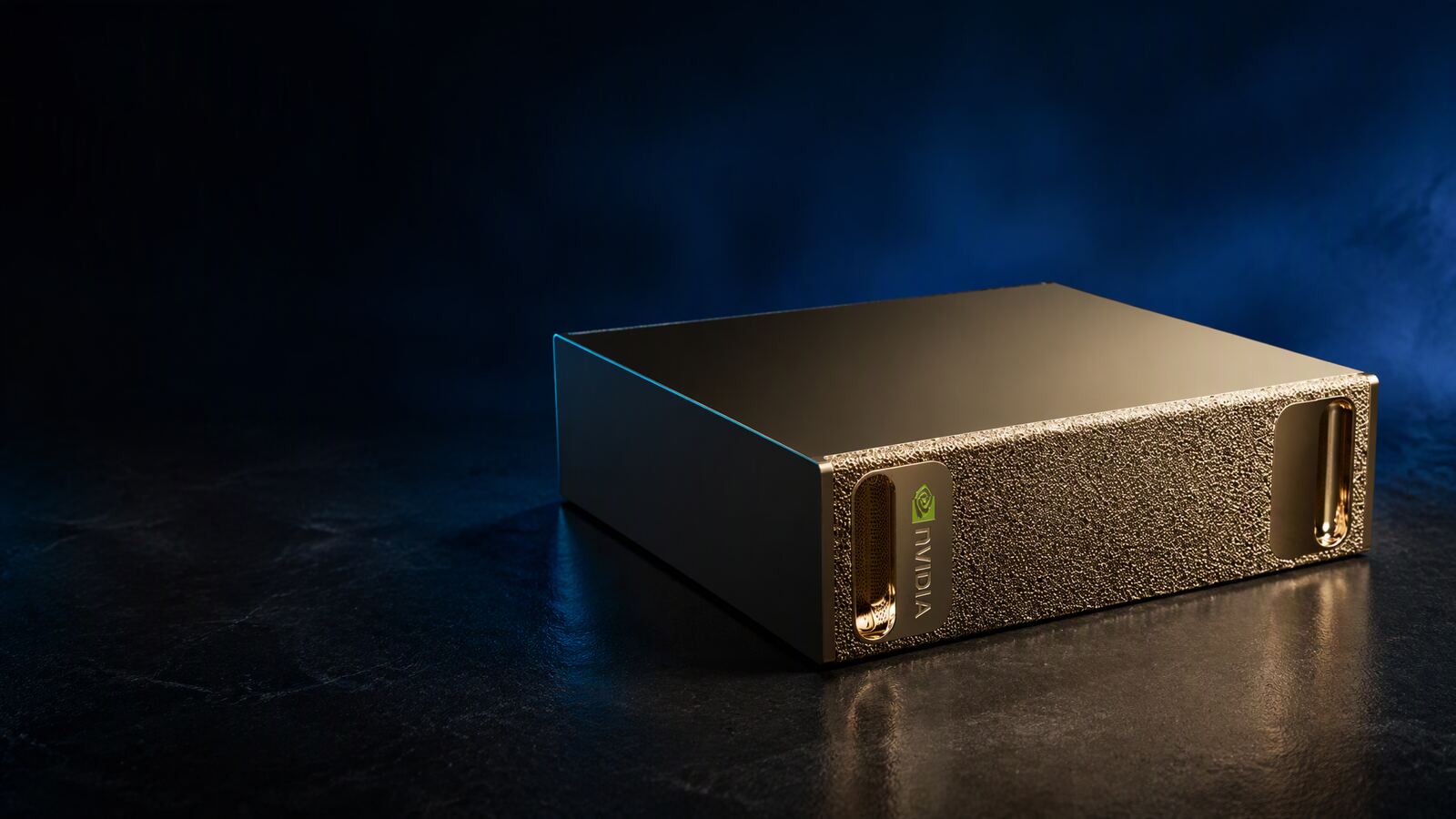
Voltage Labs spent most of 2026 running language, image, voice and training workloads on a single NVIDIA DGX Spark, the GB10 Grace Blackwell machine with 128 GB of unified memory. This report shares what we measured, what we would choose again, and the setup problems that cost us time.
About this report
All figures come from our own runs between January and October 2026, across more than 20 models and four workload classes on one machine. Software for this platform changes quickly, so treat them as a snapshot. The report is published in five parts, listed at the end of this page; this overview collects the key findings and how we tested.
How to read our numbers. We write writing speed for how fast a model produces tokens once it starts, and reading speed for how fast it ingests a prompt. GB means 109 bytes and GiB means 230 bytes; the distinction matters on a box where memory is the binding constraint. Where a figure is an estimate rather than a measurement, we say so.
Key findings
- 01
Memory speed, not compute, sets the pace.
We measured 218 GB/s of memory copy speed against a 273 GB/s spec, alongside more than 90 TFLOPS of 16-bit matrix maths. For generating text, that favours mixture-of-experts models, which read only a small slice of their weights for each token. Read more →
- 02
Three 30B-class models can share one box, with care.
A fast front model, a long-context model and a tool-use specialist fit in the 121.7 GiB of usable memory only after trimming components the specialist never used. Read more →
- 03
For long context, compare memory per token.
Nemotron-3-Nano needs about 3 KiB of memory per token of context, against 17 KiB for Gemma 4 and 32 KiB for Muse-Glimmer. A million-token context costs it about 3 GiB. Read more →
- 04
A small, fast model routes work reliably.
Qwen3-30B-A3B with thinking switched off sorted clear requests correctly every time, in 0.7 s. Gemma 4 chose correctly between answering itself and handing off to a specialist in 6 of 6 clear cases. Read more →
- 05
Not all 4-bit versions are equal.
In our May tests, a community-built NVFP4 version of Gemma 4 ran faster than NVIDIA's own with no loss of accuracy. For an image model, compressing the attention layers destroyed text in images, and no compressed variant made images meaningfully faster. Read more →
- 06
Long prompts queue up.
On Gemma 4 and qwen38-flash-next, eight long prompts sent at once took as long as eight sent one after another. Nemotron was the exception. Plan for this if agents send large documents in parallel. Read more →
- 07
Local voice works but is not yet conversational.
Our fine-tuned voice took about 2 seconds to start speaking, while a small language model answered in a third of a second. Read more →
- 08
Fine-tuning works if nothing else competes for memory.
Image LoRAs trained reliably at roughly 20–60 seconds per step. The most common failure was another service claiming memory mid-run, and automated quality scores repeatedly flattered bad results. Read more →
Download the full report (PDF)
All five parts in one 19-page PDF. Enter your email and the download starts straight away.
How we tested, and what these numbers do not show
Most tests ran on one NVIDIA DGX Spark (GB10 Grace Blackwell, 128 GB unified LPDDR5X, 121.69 GiB usable by models), mostly served through vLLM. Some voice tests ran on a desktop RTX 4070 Ti SUPER and on Modal cloud GPUs, and some training ran on fal and RunPod. Our test scripts send OpenAI-compatible streaming requests and time the wait for the first token separately from writing speed. They add a unique value to each run so cached prompts cannot flatter the results, and discard the first request after a cold start.
| Name in this report | Exact checkpoint | Served with |
|---|---|---|
| Gemma 4 26B-A4B (multi-model and routing tests) | bg-digitalservices/Gemma-4-26B-A4B-it-NVFP4 | vLLM |
| Gemma 4, NVIDIA version (compression test) | nvidia/Gemma-4-26B-A4B-NVFP4 | vLLM |
| Muse-Glimmer-30B | Weight-only NVFP4 build of meta-models/Muse-Glimmer-30B (not Meta's own quantization), with DFlash draft model | vLLM |
| Nemotron-3-Nano-30B-A3B | nvidia/NVIDIA-Nemotron-3-Nano-30B-A3B-NVFP4 | vLLM |
| Qwen3-30B-A3B (router) | nvidia/Qwen3-30B-A3B-NVFP4 | vLLM |
| Router comparisons | qwen3:30b-a3b, gpt-oss:20b, llama3.1:8b-instruct | Ollama |
| qwen38-flash-next | RadixArk/Qwen3.8-Flash-Next-NVFP4 (base: Qwen3.8-Flash-Next, 125B-A6B) | SGLang |
| qwen-coder-next | RedHatAI/Qwen3-Coder-Next-NVFP4 (base: Qwen/Qwen3-Coder-Next) | vLLM |
| glm-4.7-flash | cyankiwi/GLM-4.7-Flash-AWQ-4bit (community AWQ build of zai-org/GLM-4.7-Flash) | vLLM |
| Qwen3-VL reference | ig1/Qwen3-VL-30B-A3B-Instruct-NVFP4 | vLLM |
| Voice | Qwen/Qwen3-TTS-12Hz-1.7B-Base (fine-tuned), microsoft/VibeVoice-Realtime-0.5B | — |
| Image | ideogram-ai/ideogram-4-fp8 | ideogram4 package |
| Fine-tuning and other workloads | stepfun-ai/Step1X-Edit, Qwen/Qwen-Image-Edit-2511, Tongyi-MAI/Z-Image-Turbo, Comfy-Org/flux2-dev, nvidia/Cosmos-Transfer2.5-2B, bge-m3 | various |
- One box, one snapshot. Results come from a single unit and will shift with driver, vLLM and model updates.
- Some speeds were measured with other models loaded, as noted where it applies, which can lower them.
- Some figures are estimates or still open: the trimmed memory footprint, the specialist's tool-call success rate, and the coding re-run at recommended settings.
- Quality testing is light. Case counts are small (34 routing messages, 28 coding cases, 4 image prompts), and voice has no listener testing.
What we are testing next
- Muse-Glimmer against Nemotron as the tool-use specialist, scored first on how often each produces a valid tool call.
- The three-model set again, after trimming the specialist.
- vLLM's concurrent-request limit raised above eight.
- Nemotron at a full 1M-token context, plus a longer stability run.
- The coding suite at the model makers' recommended settings.
- Models not yet tested here: a larger gpt-oss model, Nemotron Omni, and the Nomic and Arctic embedding models.